
Perched on the ridge between the Mayo and Dan Rivers, Stoneville gets its town water through a corporation it formed with Mayodan in 1988.
Town water from a partnership formed in 1988
Treated water reaches town taps by way of a joint corporation, formed in 1988 between this town and Mayodan. According to the town, that system can currently supply 300,000 gallons a day, and town staff keep up a booster station and two water towers. Wastewater goes to Mayodan's treatment plant. The state's 2025 planning report for the system puts year-round customers at 1,308 people, with the regular supply bought from Mayodan.
None of those records count the private wells around town. Off the mains, a house drinks whatever the cracks in the rock below it deliver, and keeping the pump, tank, and casing healthy is on the owner.
A town first drawn as a half-mile circle
Settlers reached the ridge in the early 1800s. In the late 1850s, two Stone brothers bought the land, and a community grew around their general store at Henry and Main Streets. When the town was incorporated on March 5, 1877, its limits were simply everything within a half mile of a brick store.
Tobacco did the rest. Farmers Warehouse opened in 1875 as the first of several tobacco warehouses, and the Roanoke and Southern rail line arrived in 1892. Sitting at 823 feet in the northwest corner of the county, the town became a trading center for the farms around it. Today it has a zoning ordinance, and its combined Planning Board and Board of Adjustment includes members who live outside the town limits as well as inside.
What storms do to a well system
People here know what weather can do. The town learned that the hard way on March 20, 1998, when a tornado tore up much of the business district and two people died. It rebuilt. Most storms are far smaller, but they still find their way into a well system.
- Lightning that strikes nearby can travel through the ground and power lines into the pump circuit and burn out a control box, a pressure switch, or the motor.
- A power outage and the surge when it returns can leave a pump that won't restart.
- Falling limbs crack well caps and bend or split casing that sticks up in the yard.
- Heavy rain finds any gap at the wellhead and carries surface water down the casing.
After a bad storm, look at the wellhead from a safe distance, note whether the water looks or smells different, and call before drinking it if the cap or casing took a hit.
A yearly walk around the wellhead
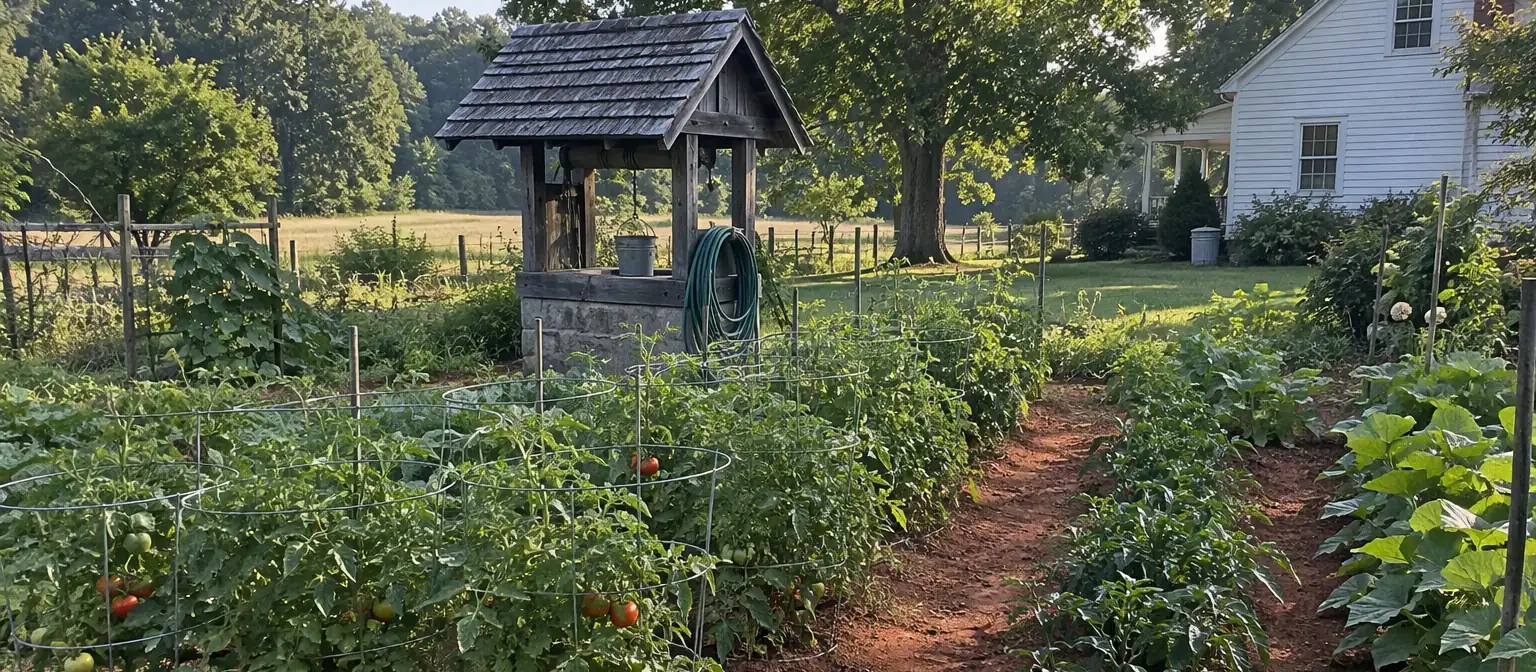
Once a year, walk out and look the wellhead over for cracks and gaps. That is NC DHHS advice, and EPA's guidance for owners fills in the details:
- Casing that is cracked, corroded, or damaged.
- A well cap that is broken or missing.
- A cracked or sunken surface seal around the pipe.
- Ground that slopes toward the well instead of away from it.
Two more EPA points: casing should never be cut off below grade, and construction, modification, or abandonment is work for a certified professional. North Carolina rules want the top of the casing a foot or more above the ground. If any of the items above look wrong, that is a well and casing repair job, not a do-it-yourself project.
Rockingham County's health department and your well
For permits and sampling, homeowners deal with the Rockingham County Health Department in the county seat, Wentworth, which enforces the state's private well rules. Building or repairing a well takes a county permit. Changing out a pump or a tank doesn't, as long as the seal is left alone.
Whichever kind of job it is, test the water afterward. NC DHHS puts it simply: once a part of the system has been fixed or swapped, retest the water, since an open well is an easy target for contamination.
Main Street is NC 770, and US 220 runs along the edge
Stoneville is 28.0 miles north of Greensboro by straight line. US 220 runs just along the west edge of town, and NC 770 is Main Street, so we come up US 220 and turn in.
The office runs Monday through Friday, 8am to 5pm. Weekend calls and texts go to (336) 613-4314.
Six services, briefly
Storm-damaged switches and control boxes are well pump repair. A motor that has quit for good means well pump replacement, followed by the disinfection the state requires. A tank that clicks the pump on and off every few seconds needs pressure tank replacement. A house with no water at all gets emergency no-water service. A cracked cap, damaged casing, or low wellhead is well and casing repair. And iron, manganese, odor, or hardness is well water treatment, sized from a lab report.
ZIP code we cover around Stoneville: 27048.