
What the tools are good for, and where they stop
Each tool does one narrow job. The checklist walks you through the safe checks for a dry house: the faucets, the breaker, and the gauge. The diagram shows what sits underground, so the words on the phone make sense. The tank tool gives you the air charge your pressure tank should hold for your switch setting. The symptom guide matches a stain or smell to the lab test that would confirm it. The finder tells you whether your town is on our list.
None of them can see your well. A gauge reading, a click, or an orange stain narrows things down, but the same symptom can come from several parts, and only a technician with a meter, or a lab with a sample, can say which. Treat the answers as notes for the phone call, not a diagnosis.
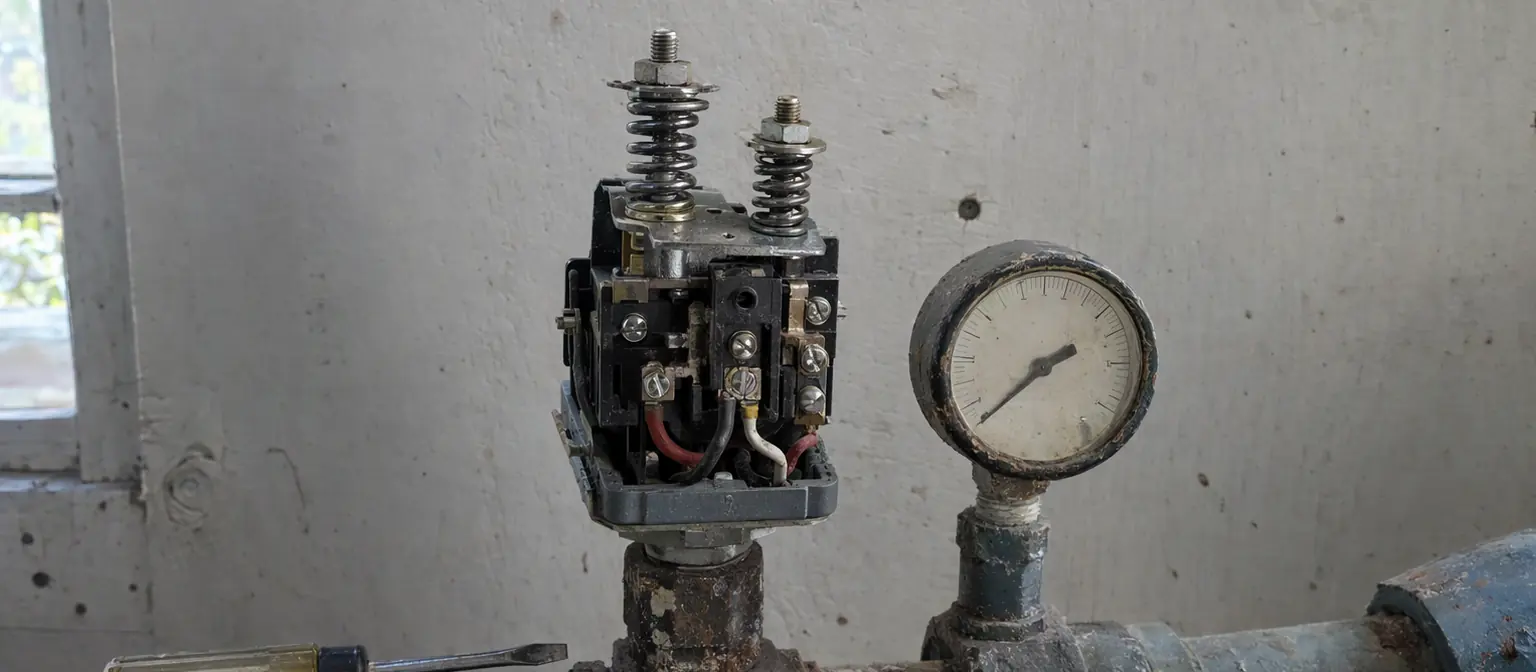
The tools also stop at the covers. Nothing here asks you to open the pressure switch or the control box, both of which can carry live 240-volt power, or to take the cap off the well. If a step ever seems to need that, it is time to call.
Signs to stop checking and call
Stop and call (336) 613-4314 if any of these happen:
- The pump breaker trips again after one reset.
- Pressing the tank's tire-style valve lets out water instead of air.
- The pump runs and runs, but the gauge will not climb.
- You hear humming or clicking near the tank and get no water.
- There is a hot smell in the well house, or the switch or control box shows dark burn marks.
- The water changed after a storm or flood, or a lab test came back positive for coliform bacteria.
If the breaker has tripped twice, the pump is running without building pressure, or you smell something hot, turn the pump breaker off and leave it off. A pump running without water, or a motor fighting a fault, can turn a repair into a replacement.