
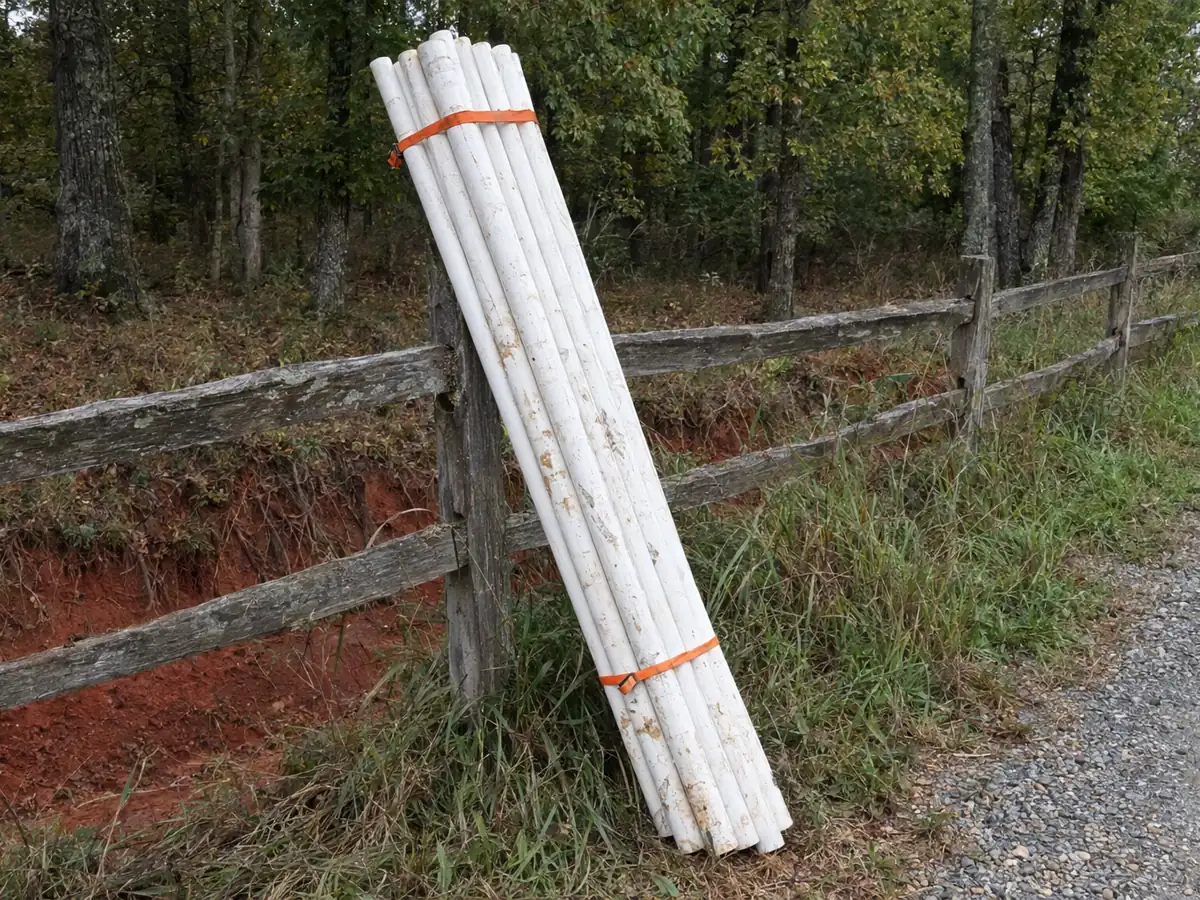
A liner is a smaller pipe set inside the well when the casing or the rock below it starts to fail. This guide to well casing and liners covers what each does, the warning signs, and the rules.
The job casing does below ground
In the Piedmont, a drilled well passes through soil and decomposed rock before it reaches solid bedrock. That upper layer is loose enough to cave into the hole, and it carries surface water that can bring bacteria with it. Casing is the steel or plastic pipe set through that zone and seated into the bedrock.
The gap between the casing and the borehole wall is filled with grout, a cement or clay seal that keeps surface water from running down the outside of the pipe. Below the casing, the well is often an open hole in the rock, fed by fractures. Near the top, the pitless adapter passes through the casing below the frost line and joins the drop pipe to the buried line to the house.
Casing height, the cap, and the ground around it
North Carolina rules require the top of the casing to end at least 12 inches above land surface, and no repair may leave the wellhead lower than that. Virginia sets the same 12-inch minimum. The ground should slope so rain drains away from the wellhead, not toward it.
The cap matters as much as the pipe. A good one fits snugly, is secured to the casing, and has a screened vent so insects and small animals stay out. A cracked cap, a missing bolt, or a gap where the wire enters is an open door for contamination.
EPA is firm on one point: never cut the casing off below the land surface. Older wells sometimes ended up buried in the yard or finished in a pit. Those collect runoff and should have the casing extended above ground.
Clues that the casing is cracked or failing
- Muddy or cloudy water after heavy rain.
- A positive bacteria test, especially one that returns after the well is chlorinated.
- New sand or grit in the water, or a pump that keeps wearing out early.
- Rust stains and high iron in a well with old steel casing. USGS notes that corrosion of iron and steel casing and fittings can raise iron levels.
- Settling or cracks in the ground or pad around the wellhead.
- Rust holes, dents, or mower damage on the exposed pipe.
NC DHHS says coliform bacteria and E. coli can enter well water when a well is poorly built, cracked, or unsealed. Virginia Cooperative Extension adds that bacteria keep coming back after chlorination if a source like a loose cap or cracked casing is not fixed.
What a liner does and when it makes sense
A liner is a smaller pipe, usually PVC, set inside the existing casing or down into the open rock hole. It solves two kinds of problems. If the casing has rusted through or cracked, a liner sealed in place gives the well a new wall. If the open hole keeps shedding rock chips or sediment, a liner holds that material back so the pump is not buried or worn.
For liners used in well repair, North Carolina rules allow NSF-approved PVC pipe rated at 160 psi, with the space around the liner completely filled with cement grout. A liner narrows the inside of the well, which can limit the size of pump that fits.
How North Carolina and Virginia treat casing work
Under North Carolina rules, broken, punctured, or otherwise defective casing, seals, or wellhead parts must be repaired or replaced, or the well must be permanently abandoned. Well repair and extending casing are well contractor activities, so a certified well contractor has to be present. Repairing the well itself also falls under the county health department's permit program, unlike pump or tank work.
Virginia requires anyone who builds, repairs, or alters a private well to be licensed and certified. Extending casing upward above ground, or replacing a cap or seal with an equivalent one, is not considered an alteration there. Altering, deepening, or abandoning a well does require a written permit.
A yearly walk-around you can do yourself
NC DHHS suggests checking the wellhead once a year for cracks or openings, and EPA recommends periodic checks for damaged casing, a broken or missing cap, and settling or cracked surface seals. Look, but do not open anything.
- The casing stands at least 12 inches above ground and is straight and solid.
- The cap is tight, every bolt is in place, and the vent screen is intact.
- The ground slopes away, with no puddles or washouts at the base.
- Fuel, fertilizer, and chemicals are stored well away from the wellhead.
If something looks wrong, Piedmont Well and Water Services repairs casing, installs liners, replaces well caps, and inspects wells. Call (336) 613-4314 and describe what you found.