Well Owner Guide

These guides answer the questions well owners ask us most, in plain words: how your well works, and what the state health agencies recommend.

No water? Check these before you call.

Safe checks only. Nothing here asks you to open a cover or touch wiring.

  1. 1 Is every faucet dry, or just one?

    Check an outdoor spigot too. If it runs, the well is still sending water.

  2. 2 Find the breaker marked "well" or "pump." Is it tripped?

    Most well pumps run on a two-pole breaker, the wide one that takes two slots.

  3. 3 Look at the pressure gauge near your tank. Is it at or near zero?

    No gauge, or cannot find the tank? That is fine. Call and we will walk you through it.

  4. 4 Did the water run hard for a long time before it quit (irrigation, filling a pool, a running toilet)?

    A pump that runs with no water around it can overheat. If you suspect this, shut it off.

  5. 5 Power is on and the gauge sits near zero. Can you hear the pump or a click at the pressure switch?

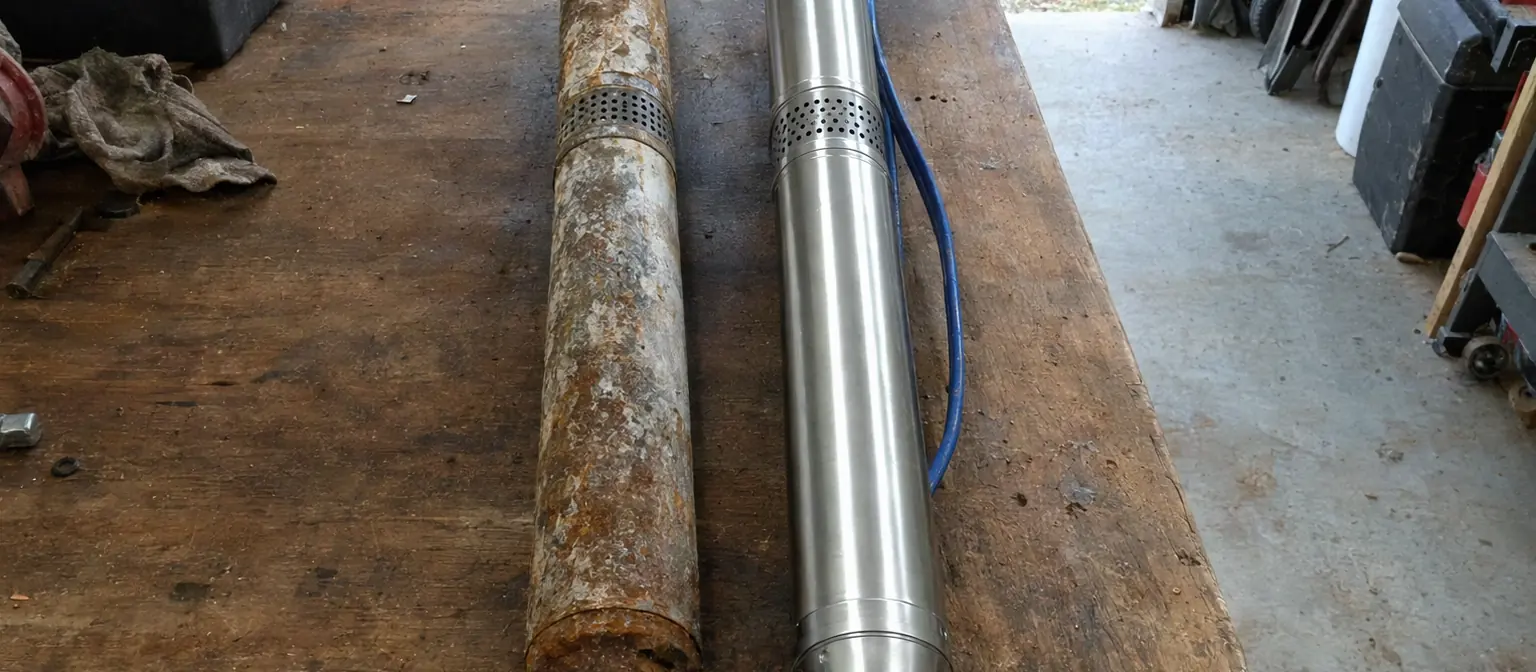
An old rusted well pump and a new stainless one side by side on a workbench

Why we bother writing it down

Most well trouble arrives with the same handful of questions. Is the pump dead? Can I reset this? Is the water safe to drink? Do I need a permit? The answers do not change much from one house to the next, so it makes sense to put them where you can read them at your own pace instead of trying to remember a phone call.

There is a second reason. A homeowner who knows what a pressure tank does, or what the switch is reading, can describe a problem clearly, and a clear description gets the right parts on the truck. It also makes it harder for anyone, us included, to sell you something you do not need.

The guides stick to what is known. Where a state agency, the EPA, the USGS, or the National Ground Water Association has said something about wells, we use what they said and point you to the source. Where the answer depends on your particular well, the guide says so instead of guessing.

Using the guide in a pinch or for planning

When the water is out. Start with the no-water checklist on this page. It sticks to safe checks: the faucets, the breaker, and the tank gauge. Leave the covers on the pressure switch and control box, and leave the cap on the well. If the checklist points to a technician, call (336) 613-4314 with what you found at each step.

When nothing is wrong yet. This is the better time to read. Learn where your breaker and tank are, check the tank's air charge, walk around the wellhead, and put the state's testing schedule on a calendar. If a pump or tank is getting old, read the guide on repairing or replacing before the day it quits, so the choice is not made in a hurry with a dry house.

The guide is not a repair manual. Anything involving wiring, the well cap, or the pump belongs to a certified well contractor.

Questions about the guide

Still stuck? (336) 613-4314

Who is responsible for the water from a private well?

You are. A private well is not run like a public water system. In North Carolina, the only required test is the one done when a new well is finished, and NC DHHS notes that nothing else is required after it. The Virginia Department of Health says it directly: in a home with a private well, testing the water is the homeowner's responsibility.

What are the main parts of a well system, in order?

Underground: the casing that lines the top of the well, the submersible pump down in the water, the drop pipe and wire that carry water up and power down, and the pitless adapter where the line leaves the casing below the frost line. On top sits the well cap. In or near the house: the pressure tank, the pressure switch and gauge, a control box for three-wire pumps, and any treatment equipment.

What should I do in my first week in a house with a well?

Find the breaker for the pump and label it. Find the pressure tank and note where the gauge needle sits when the pump shuts off. Walk out to the wellhead and look over the cap and the casing. Then get the water tested if the seller's results are old or missing, and ask the seller for any well paperwork and past repair records.

Does a well need attention when everything seems fine?

A little, yes. NC DHHS asks owners to look the wellhead over yearly for cracks or gaps, and to test for bacteria every year. The National Ground Water Association goes further and recommends a yearly checkup by a licensed or certified professional. Bacteria and nitrates have no taste, color, or smell, so a well can seem perfectly fine and still owe you a test.

Is shock chlorination something a homeowner should do?

It is better left to a professional. For a flooded well, NC DHHS strongly urges having the local health department or a licensed well driller do the shock chlorination, and Virginia Cooperative Extension suggests considering a licensed and certified well driller. Chlorine alone also will not fix the cause. A loose cap or a cracked casing lets bacteria return until it is fixed.

If I can only manage one water test a year, what should it cover?

Start with bacteria. NC DHHS puts total and fecal coliform on a yearly schedule, and the EPA's yearly list adds nitrates, total dissolved solids, and pH. Those cover the problems most likely to make someone sick, and the ones you cannot see. The longer lists, such as heavy metals every two years, can follow on the NC DHHS schedule.

Who oversees private wells in North Carolina and Virginia?

In North Carolina, county health departments permit, inspect, and test wells under state rules, with statewide oversight from the On-Site Water Protection Branch at NC DHHS. Well contractors are certified by a commission that also sits under NC DHHS. In Virginia, construction permits are issued under the State Health Commissioner through local health departments, and contractors must be licensed and certified under Virginia law.

What should I keep away from the wellhead?

Anything that can wash into it. Keep fuel, fertilizer, weed killer, and pet waste well away, and slope the ground so rainwater runs off instead of pooling at the casing. Never pile soil or mulch over the top of the casing. North Carolina wants a foot or more of casing in plain view. Leave room to reach the cap, and keep mowers and vehicles clear of it.

Good references

Official pages we point homeowners to. They open in a new tab.

No water, low pressure or bad taste?

Call or text. Monday to Friday, 8am to 5pm. Saturday and Sunday: call or text.