
It is one of the most common well complaints, and one of the hardest on equipment. Well pump short cycling usually traces back to the pressure tank, but switches, leaks, and tank size can cause it too.
How short cycling shows up around the house
You usually hear it before you see it. The pressure switch clicks every few seconds while a shower or hose runs. The lights may dip each time the pump starts, and pressure at the tap surges and sags in a steady rhythm.
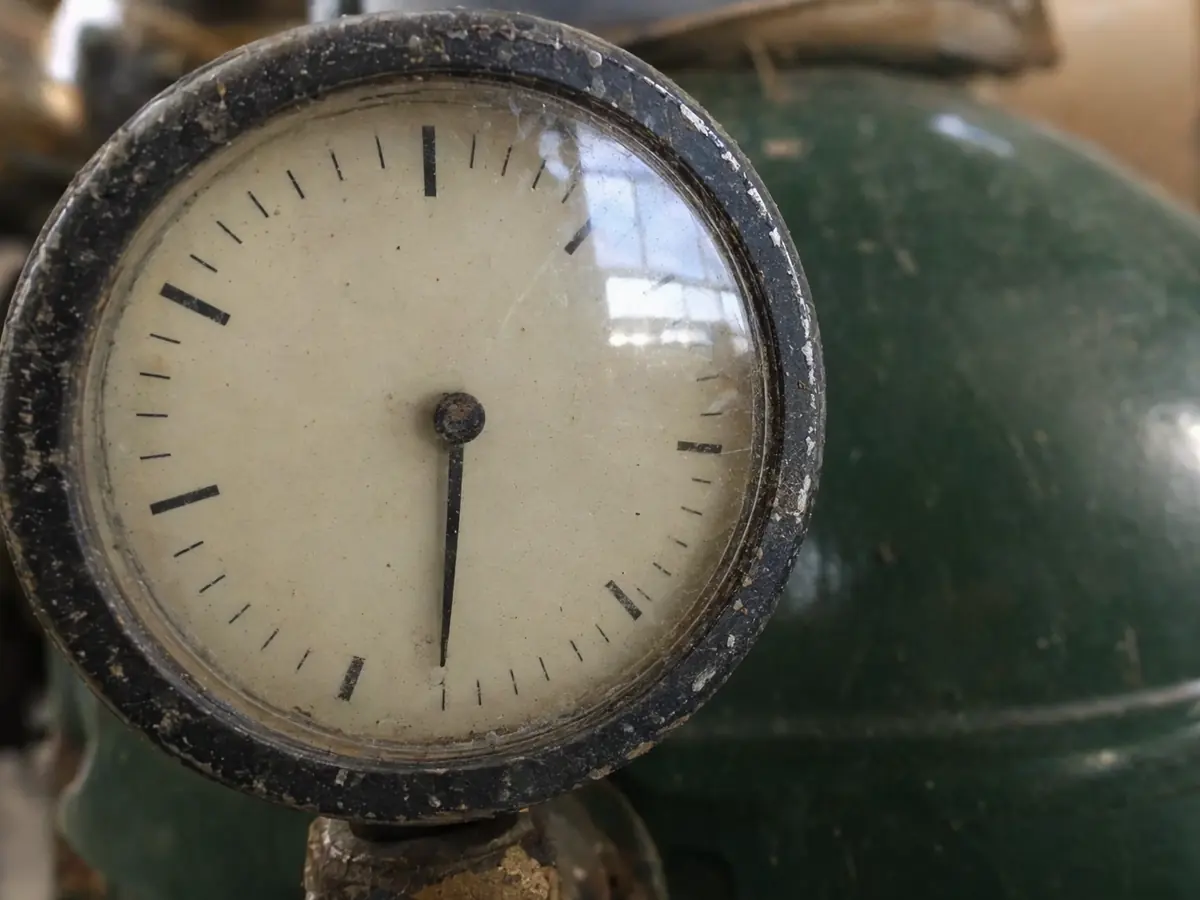
The gauge near the tank tells the story. On a healthy system the needle drifts down slowly as you use water, the pump starts at cut-in, and it runs long enough to fill the tank. When the system short cycles, the needle swings from cut-in to cut-out and back in seconds.
A tank that has lost its air cushion
This is the usual culprit. A bladder or diaphragm tank depends on a charge of compressed air, set about 2 psi below the switch's cut-in pressure. Over time that air seeps out through the valve and the rubber, and the tank holds less and less usable water.
Once the air is gone, the tank is just a steel can full of water. It cannot push anything out, so every glass you draw drops the pressure straight to cut-in and the pump fires. A tank in this state is called waterlogged. Restoring the air charge with the pump off and the tank drained may be all it takes. If the charge is gone again within weeks, the tank is leaking.
When the bladder or diaphragm tears
A torn bladder lets water into the air side of the tank, and the tank waterlogs even though nobody let the air out. With the pump off and the water drained, press the pin on the air valve. A spit of water instead of a hiss is the giveaway. A tank with a failed bladder is replaced, not repaired.
Older galvanized tanks have no bladder at all. Their air sits directly on the water and slowly dissolves into it, so they waterlog as a matter of course and need regular attention.
Pressure switch trouble that mimics a bad tank
The pressure switch senses pressure through a small tube or nipple underneath it. In wells with sediment or iron, that opening can clog, and a partly blocked tube makes the switch chatter on and off.
Worn contacts cause trouble too. Every start and stop draws a small arc across them, and years of that leave them pitted and burned. A switch set with too narrow a gap between cut-in and cut-out also shortens every cycle.
None of this is a homeowner repair. The switch carries line voltage under its cover, so leave the cover on and let a technician test it.
Leaks that start the pump with every tap closed
If the pump starts by itself with nothing running, water is going somewhere. A slow leak brings it on every so often. A bigger one keeps it cycling almost nonstop.
Common sources are a cracked line buried between the well and the house, a dripping outside spigot, a leaking fitting at the tank, or a check valve that lets water run back down the well. Try this: close every tap, note the gauge, and wait 30 minutes without using water. A lower reading means a leak. A soggy strip of yard along the water line is worth a look.
A tank too small for the pump
Some systems short cycle with a perfect air charge and no leaks. Every tank holds a set amount of usable water between cut-in and cut-out, and a strong pump fills a small tank in moments. This shows up when a larger pump goes in without a matching tank, or an older house still has its original small one. The answer is a larger tank, or a second tank beside the first, sized to the pump's output.
What constant starts do to the pump
Starting is the hardest moment in a motor's life. It draws several times its running current for that first instant, and the windings heat up. A pump that starts a few times an hour lasts. One that starts every few seconds cooks itself slowly. Switch contacts burn, and on three-wire pumps the control box parts that help the motor start take a beating. The yearly checkup the National Ground Water Association recommends covers the pump motor, tank, and switch together, a good way to catch this wear early.
Short cycling is far easier to fix early than after the motor gives out. If yours will not settle down after you check the tank's air charge, Piedmont Well and Water Services can find the cause and fix it. Call (336) 613-4314.
If this sounds like your well, the signs of a failing pump and repairing versus replacing are worth a read too, and well inspection is where we take it from there.