
Homes off those systems still have a pump in the ground, and those are the homes we do well service in Whitsett for.
Three water systems, and a lot of wells between them
The town runs a small water system limited to property near the intersection of Highways 70 and 61. A history note on the town's website, dated January 25, 2015, tells how it started: most of the town used well water until August 2012, and 35 homes in the first phase got the town's first water bills on October 3, 2012. The note said the town planned to extend public water to the rest of town as money allowed. The town has since posted water policies effective June 11, 2025, so the system may have grown.
The town also says residents with a Whitsett address can be on the Greensboro, Burlington, or town system, and that the water bill shows which. No bill at all means you are on a well.
Livestock, crops, and 40,000-square-foot lots
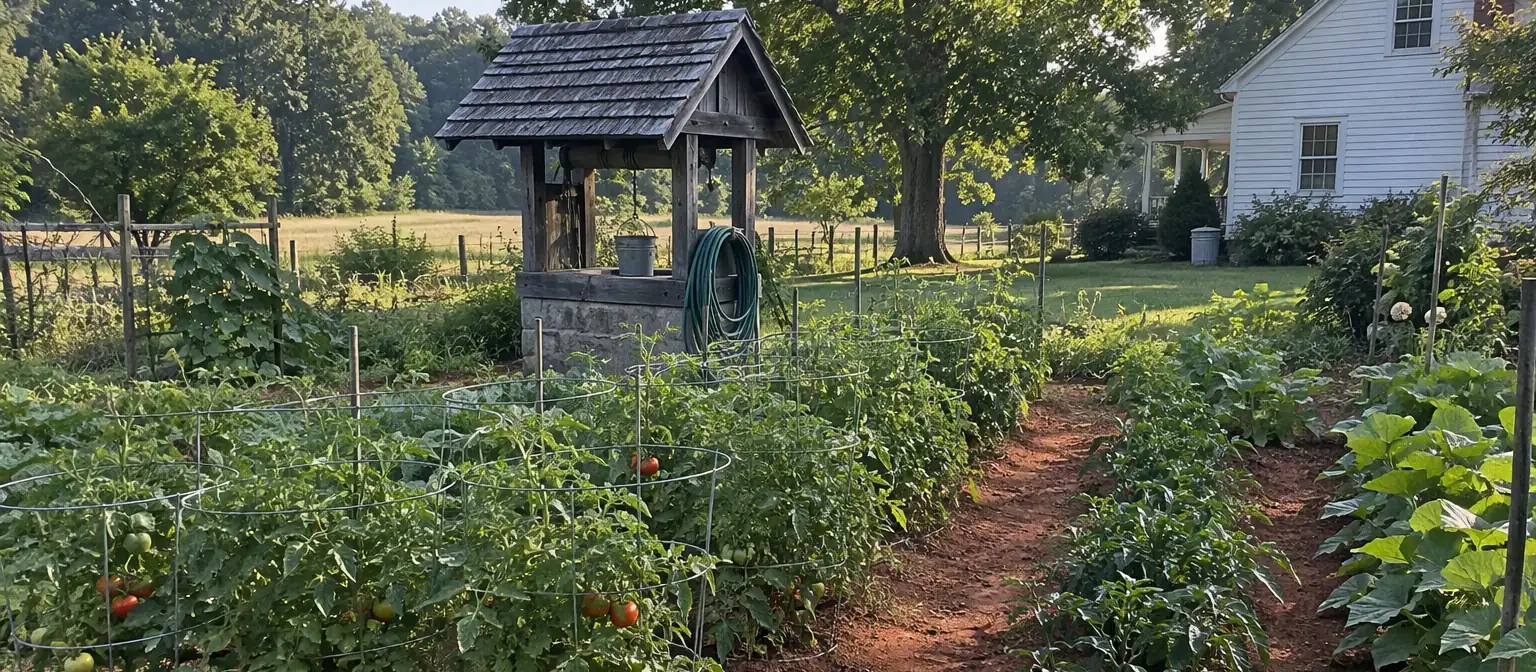
The town describes itself as split between residential and agricultural areas, with many residents farming crops and keeping livestock. The zoning bears that out. On the county zoning map, about 950 of the 1,660 acres zoned under the town are AG, roughly a quarter more is RS-40, and a smaller slice is RS-30. Under the town's development ordinances, effective June 13, 2023, AG and RS-40 lots need at least 40,000 square feet and RS-30 lots 30,000, and both RS districts are meant for large-lot homes without public water or wastewater service.
Livestock and wells can share a farm safely, but distance and slope matter. Keep barns, paddocks, and manure piles downhill and well away from the wellhead. Bacteria and nitrate from animal waste are invisible, so a yearly lab test is the only way to know the water is clean. A stock tank on the same well adds demand, too. A pump sized for a house can run long and hot keeping a trough full in July.
For scale, the 2020 Census counted 584 residents on about 2.58 square miles of land.
Houses from the early 1970s
By Census survey estimates, the median home in town was built in the early 1970s. The Whitsett Historic District, listed on the National Register in 1999, lies next to the Guilford and Alamance county line. Plenty of the houses here, in other words, are older than any county well rule. Guilford's local rules, with county inspection of construction, began June 1, 1989.
On a well that old, we look hard at the top of the casing. Some older wells were finished with the casing at or below the ground, which current state rules do not allow. According to NC DHHS, a well that is cracked, unsealed, or poorly built is how coliform bacteria get into the water. Steel casing rusts with age, and the USGS points to corrosion of steel casing and fittings as one cause of high iron. Orange stains in the laundry, a casing you can wiggle, or a cap that does not seat are all reasons to call.
Part of the town also sits in the Lake Mackintosh water supply watershed, and NC DEQ lists the town among the local governments under the Jordan Lake stream buffer rules, carried out by Guilford County.
Permits through Guilford County, under state rules
Guilford County Environmental Health is the permit office for wells in town. Repairs to the well itself, such as casing work, need a county permit. Pump and tank replacements do not.
The rules that office enforces changed in 2026. Session Law 2026-32, signed July 2, put every county health department under the state's private drinking water well program and ended local permitting rules for drinking water wells. Guilford's own rules were repealed on that date, and county staff now apply the state standards. The county also handles planning and permitting for the town, and the 2026 change did not affect local rules for non-drinking-water wells.
East on I-40/I-85, then NC 61
The town is 11.0 miles east of Greensboro measured straight across. We take I-40/I-85 east and pick up NC 61, or come out US 70 (Burlington Road). Gibsonville, Elon, McLeansville, and Burlington are all nearby.
Office hours are 8am to 5pm, Monday through Friday. On weekends, the call-or-text line is (336) 613-4314. If livestock depend on the well, say so, since a dry trough is its own kind of emergency.
Six ways we help Whitsett well owners
These are the six core jobs, with a farm-country slant.
- Repairing pumps that strain to fill a farmhouse and a stock tank at once.
- Replacing worn pumps and disinfecting the well afterward.
- Replacing pressure tanks so the pump stops short cycling.
- Handling no-water emergencies, weekdays and by call or text on weekends.
- Repairing old casing, loose caps, and wellheads that sit too low.
- Fitting treatment for iron, bacteria, or hardness after the lab results are in.
ZIP code we cover around Whitsett: 27377.